
研究用フローサイトメーター
1953年にフローサイトメーターを初めて提供した企業として、フローサイトメトリーで科学の進歩と研究の可能性を広げるための支援を続け、他の機器ではできないソリューションを提供するための技術革新を続けています。
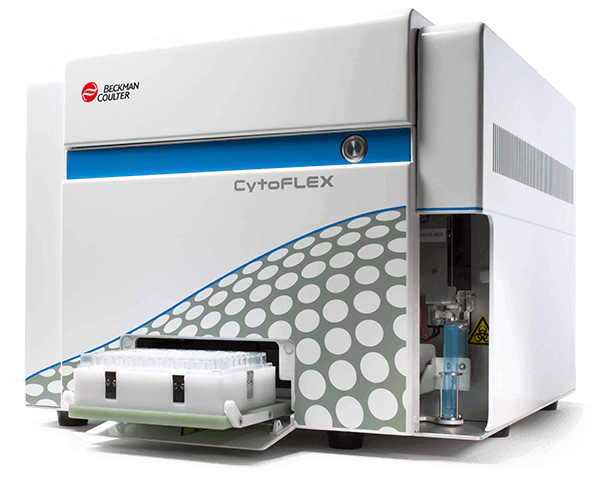
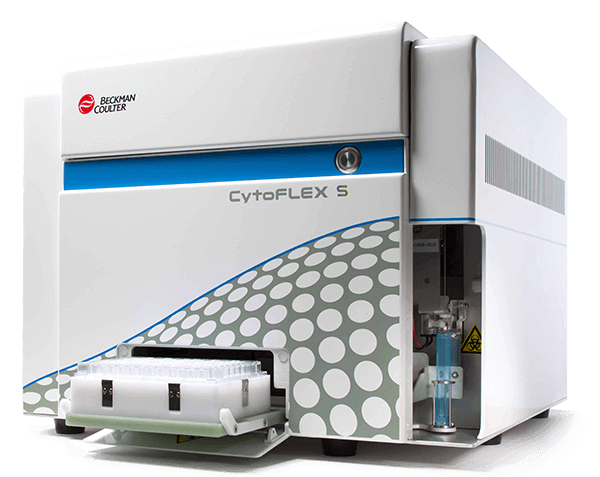
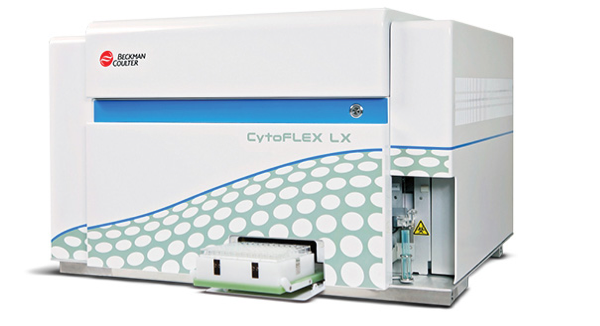
CytoFLEXファミリーは、最適なレーザー励起と蛍光検出系により少ない光ロスと高感度を実現した革命的なコンパクトフローサイトメーターです。CytoFLEX、CytoFLEX S、CytoFLEX LXの搭載レーザーの種類と数の異なる3つのモデルがあり、コンパクトで簡単に操作ができる上に優れた感度を提供するパワフルなセルアナライザーです。


Research Flow Cytometers FAQs
What software is used with research flow cytometers?
Flow cytometry software supports instrument setup, data acquisition, quality control, analysis, and reporting. Depending on your workflow, software can also simplify experiment setup and enable advanced data visualization and interpretation.
What research applications can flow cytometers support?
Research flow cytometers support a wide range of applications, including immunology, oncology, stem cell research, cell therapy, extracellular vesicle (EV) analysis, apoptosis studies, cell cycle analysis, and high-dimensional single-cell research. Different instrument configurations are designed to meet varying experimental needs.
What is a research flow cytometer?
A research flow cytometer is an instrument used to analyze the physical and fluorescent characteristics of individual cells or particles in suspension. Researchers use flow cytometers for applications such as immunophenotyping, cell biology, extracellular vesicle (EV) research, and multi-parameter analysis to better understand complex biological systems.
How do I choose the right research flow cytometer?
The best research flow cytometer depends on your application, the number of parameters you need to measure, sample throughput, and future scalability. Researchers should consider factors such as laser configuration, detector capabilities, sensitivity, ease of use, software, and whether conventional or spectral detection is best suited for their workflow.
Can I upgrade my existing flow cytometer with spectral capabilities?
Some research flow cytometer platforms offer modular upgrades that allow researchers to add spectral detection without replacing their existing instruments. This approach can help expand experimental capabilities while protecting previous instrument investments.
